
Hyundai Santa Fe 2026: A More Refined Driving Experience
Hyundai Santa Fe 2026: A More Refined Driving Experience
Posted on February 11, 2026
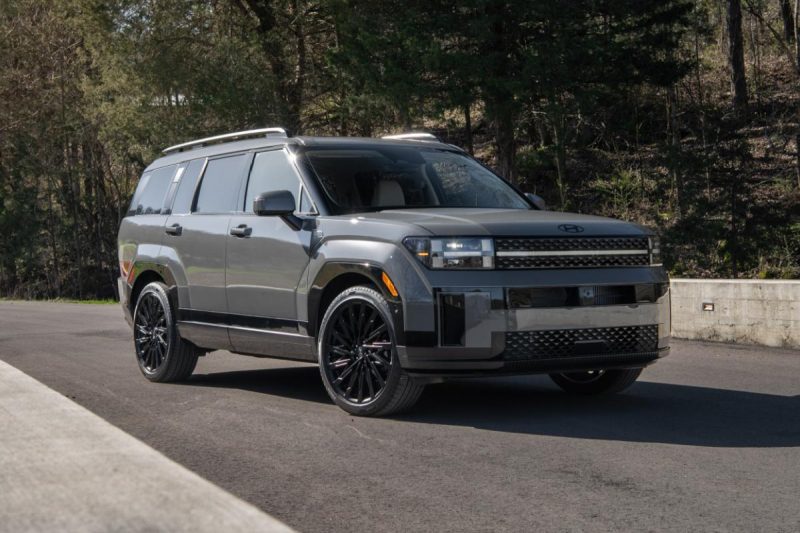
Despite their major differences, all generations of the Santa Fe share one thing in common: they’ve always stood out thanks to their bold design, reliability, and Hyundai’s strong understanding of its clientele. The fifth generation is no exception—in fact, it may be the best expression of those qualities yet. The current Santa Fe doesn’t resemble previous versions, nor does it look like anything else in Hyundai’s lineup. While that bold direction could have backfired, it has instead proven to be a major success.
There are no major styling updates for the 2026 Hyundai Santa Fe, aside from minor changes to the color palette and a revised grille for the XRT version. The most significant update isn’t visible from the outside: Hyundai has replaced the dual-clutch transmission with a conventional eight-speed automatic transmission, promising smoother and more refined performance that better suits the Santa Fe’s character.
Lineup and Pricing
The 2026 Hyundai Santa Fe lineup is divided into gasoline and hybrid models. The gasoline range begins with the XRT at $51,016, aimed primarily at off-road enthusiasts. The Luxury trim follows at $54,016, offering enhanced refinement and premium features. At the top of the gasoline lineup sits the Ultimate Calligraphy.
Interestingly, the hybrid version starts at $46,816, making it more accessible than the gasoline model. However, pricing increases significantly for the Luxury and Calligraphy hybrid trims, which begin at $56,566 and $59,916 respectively.
Category and Competitors
The new-generation Santa Fe continues to attract attention with its bold styling, versatile interior, and advanced technology. It also remains competitively priced compared to many midsize SUV rivals, making it one of the strongest value propositions in its segment.
Rivals: Chevrolet Blazer, Honda Passport, Jeep Grand Cherokee, Kia Sorento, Nissan Murano, Subaru Outback, Toyota Crown Signia, Volkswagen Atlas Cross Sport.
Design and Technologies
Hyundai took a bold approach with the Santa Fe’s boxy design, drawing inspiration from early 2000s SUVs—and it works remarkably well. The only controversial element may be the placement of the rear lights. While some trims approach premium pricing, the overall design, especially the distinctive headlight signature, is striking and memorable.
Inside, the cabin is spacious and highly comfortable. A wide digital dashboard dominates the front layout, delivering a modern and upscale feel. The Santa Fe offers premium materials, excellent build quality, and seating for up to seven passengers—an increasingly rare feature in this segment.
Performance
The 2026 Santa Fe offers two powertrain options. The hybrid pairs a 1.6-liter turbocharged four-cylinder engine (178 horsepower and 195 lb-ft of torque) with an electric motor for a combined 231 horsepower and 271 lb-ft of torque. Fuel economy is rated at 6.8 L/100 km in the city and 6.9 L/100 km on the highway.
The gasoline version features a 2.5-liter turbocharged four-cylinder engine producing 277 horsepower and 311 lb-ft of torque, paired with a new eight-speed automatic transmission. All versions come standard with all-wheel drive.
Weak Points
The design is polarizing, and the extensive technology may require an adjustment period for some drivers.
Strong Points
The Santa Fe stands out visually, offers generous standard equipment, and delivers a refined driving experience. The hybrid model is particularly impressive for its fuel efficiency.
Signature Element
The bold design is unquestionably what sets the 2026 Hyundai Santa Fe apart from the competition.
Final Thoughts
Hyundai took a major risk by reinventing the Santa Fe for its fifth generation, but the gamble paid off. While the styling may not appeal to everyone, the SUV’s uniqueness, comfort, and value make it one of the most compelling options in its class.